Get Your Camera Away From Me, Dog.

A REPORTER AND PHOTOJOURNALIST were covering a murder story when a friend of someone involved in the story approached the news team. He wanted the crew to leave, and he didn't want to be videotaped.

"Get your camera away from me, dog," he said as he slapped the camera away.

Then he walked back to his car and brandished a pistol.

The news crew turned this into a story. The lead story for the 5:00 PM newscast.

Is this news?

Watch the video above. Is it good TV or good journalism, or both?

Porsha Grant: The Architect of the Newscast.

PORSHA GRANT WAS DOING an internship at a newscast in Georgia when she noticed a woman quietly sitting in the corner. Porsha learned that the woman was the newscast producer, the architect of the show. So she shadowed the woman and learned about the job. Pretty quickly, Porsha's dreams of being an on-air reporter were gone. She realized that she wanted to run a show.

"You're in charge," Porsha, who now produces for the 4 PM show on 6abc, said yesterday in class. "You're in control and you sit in the air condition while doing it."

She has a world of things to consider when shaping her newscast (which is the 4:30 to 5:00 pm portion of the show). She must decide what is the most important story, when to run the other stories, who should be covering what, and when do they need to go live. She must also set the rundown so that the show flows, and that there is no awkward juxtaposition of stories.

"We look for stories that are going to affect the most people," she said.

Weather is the greatest common denominator, she added. The 4:00 show is popular with women, so the newscast offers a lot of consumer affairs stories and lighter news. They are trying to appeal to a younger viewership, so the anchors (below) are younger and there are a lot of multimedia elements to the show. Twitter is referenced frequently.
Planning for the show begins at 9 am when they have their story budget meeting. On some days, however, she scraps everything they've planned because breaking news occurs.

She said that it's a massive responsibility being a journalist, especially at 6abc, which has been the top rated news station in Philadelphia for nearly four decades.

"I take it very seriously," Porsha said. "I want people to get something from my newscast."

She followed up with, "I'm not a brain surgeon. I'm not going to cut a vein and somebody's going to die."

The successful formula for the station includes developing the personalities of the reporters and anchors so that viewers feel a connection to them, and the station seemingly being everywhere. They'll cover everything from community project ribbon cuttings to the royal wedding.

"We're everywhere there's a story," she said.

Here are a few other things she said that stuck out to me:

• Broadcast journalists must be good writers. What does that mean? You need to be able to condense complicated stories into understandable copy that can be presented quickly - as little as 25 seconds. The tone needs to be conversational. You can be colloquial but you still need proper grammar.
• There is no rule or true path to landing your dream job. Some people bounce from smaller station to larger station, to larger station. Others work their way up from within one operation.
• Porsha left her hometown and family in Georgia because she loves what she does.
• "Breaking in can be difficult," she said. But if you do internships and be aggressive when you are there, you'll impress people. "Take the initiative. People will remember you for that."
• To be on television, you need an "accent-less, Midwestern" delivery.

• When reporter Alicia Vitarelli said on air that her dress came from Saks, the store sold out of the dress the next day.
• Reporters, anchors and newscasts that sensationalize information will see short term bumps in their ratings. but it won't last. "Viewers aren't dumb," Porsha said.

• Despite 6abc being an owned and operated station, part of the Disney family, there is no mandate to promote Disney products. They do, however, promote abc programming like Dancing With the Stars and Diane Sawyer exclusive interviews.

• The best part of her job? "I really do feel like I'm helping people," she said.

David Brown: "There is a Right, Wrong and a Whole Lot of Shades of Grey."

AN ENRAGED GUNMAN mistook David Brown as the person who stabbed his friend. The gunman found David, then just a teenager from West Philly, and pointed a gun at him. When he tried to shoot, the gun jammed. And David ran.

Then he wrote about the experience, and that got him interested in journalism.

He began writing for the school newspaper at Central High, and continued while attending Duquesne University. One day, while playing football, a medical-transport helicopter crashed on the field. He was an eyewitness to the events as they unfolded, so he wrote about them. The story ran in the school newspaper and was picked up by the Associated Press. While a sophomore in college, he had a story running in newspapers around the country.

"Journalism is an awesome responsibility," he said in class yesterday. "You have to get beyond the rhetoric. What are the facts?"

He is currently an executive with United Healthcare but he is also chairman of the board at WURD 900 AM, a conduit to the area's African-American community, and he writes columns for the Philadelphia Inquirer. He previously ran his own advertising firm. He has worked with young people for many years, introducing them to advertising and broadcasting.

At the radio station, David said that they try to present as many viewpoints as possible so that listeners can make informed choices.

"There is a right, wrong and a whole lot of shades of grey," he said.

Unlike other radio programs and stations, WURD strives find the proper balance rather than stir public reaction. Journalists, he said, are supposed to regulate the flow of public discussion - not telling people what to think but what to think about.

As a columnist, however, he tries to sway readers one way or the other.

"I never know how I'm affecting people until they act," he said. "Journalists can put fuel to a fire or dampen it.

He said that niche media, like WURD, is and will continue to be very important.

"Niche is being redefined everyday," he said. "It changes as we change the way we communicate."

The most important thing for niche media journalists is to retain authenticity.

"Without integrity," he offered," people won't rely upon it."

What stood out for you?

Should The Atheist Be Allowed To Voice Her Opinions?

A HIGH SCHOOL STUDENT in Tennessee had her story in the school newspaper killed by school administrators who thought her views on atheism were potentially disruptive.

The student, who is the editor of the paper, an honors student and an atheist, wrote, "Why does atheism have such a bad reputation? Why do we not have the same rights as Christians?"

The school, which is predominantly Christian, has prayers offered at the start of many sporting events, and during graduation services. The student argues that these actions are in violation of the First Amendment, which argues for freedom of religion.

Is the school allowed to deny publication of the student's story?

Should the student be allowed to voice her opinions?

Read her original story here.

(Image from the Knoxville News Sentinel)

"America Has Always Been Fascinated By The Outlaw."

COVERING ORGANIZED CRIME isn't always the most important story of the day, both George Anastasia and Dave Schratwieser admitted yesterday. But there's great drama, like a soap opera. Especially in the modern era of the Philadelphia mafia.

"This is the most dysfunctional time in mob history," Anastasia said. "The Philadelphia mob are like The Simpsons of the underworld."

Anastasia, who graduated from Dartmouth College with a degree in French Literature, has been covering the mafia for the Philadelphia Inquirer for more than 30 years. Schratwieser has specialized in law enforcement and organized crime coverage for most of his career as well, moving from print to television. He's been at Fox29 since 1994.

The two did a weekly segment on the underworld for several years.
It wasn't easy to get good information in the beginning, Anastasia said. He did what most reporters do - talked to cops and defense lawyers. One day, a guy called him and said that his stories were all wrong.

"He was a typical South Philly guy," Anastasia remembered. "He had to get the last word."

So Anastasia developed a relationship with this character, using his information to balance out the sanitized information from officials. This changed everything - all of the sudden, the stories had a life to them, and more people came forward to talk (albeit anonymously), from within law enforcement and the mob.

Both reporters stressed that they never revealed information to either the cops or underworld figures. In fact, on the day one of the Philly mob guys was picked up by cops, Schratwieser received a phone call from the gangster an hour before the arrest. He thought Schratwieser might know about an impending arrest.

Schratwieser said he knew nothing. But he was actually in a Fox29 vehicle around the corner from the guy's house, behind a row of law enforcement vehicles preparing to move in.

"It can be difficult when developing sources," Anastasia said. "These guys think we're friends."

Occasionally, he has meals with mobsters and they try to pick up the tab.

"A lot of these guys have John Gotti Syndrome," Anastasia joked. "They think, 'What's the point of being a gangster if nobody knows?'"

But he declines their offer and pays his own way.

Both reporters have established positive reputations within law enforcement and the underworld for being fair in their stories. Still, former Philadelphia mob boss John Stanfa put a contract out on Anastasia, which Anastasia learned about from the hitman hired to throw grenades through his window.

"They guy told me and said, 'Nothing personal,'" Anastasia remembered.

Here are a few other things that stood out from their visit:

• Schratwieser landed his first journalism job straight out of college because he had been an intern there until he graduated. He got his first job in television, as a producer, after running into a friend in the subway (he was taking broadcast classes while working as a print reporter). He did his first on-air story assignment because six reporters called out sick one day.
• As a general assignment reporter at Fox29, Schratwieser now turns two stories every day, and often re-packages another for the evening news.
• Anastasia used to be able to spend weeks developing stories without actually printing anything. Because of cutbacks, that luxury to develop sources and dig for information is pretty much gone.
• Much of the great information they get is through these sources, some of whom are angry lawyers, mob enemies, proud cops ... people with a particular agenda.
• If you burn a source - in law enforcement or in the underworld - they will never speak to you again.
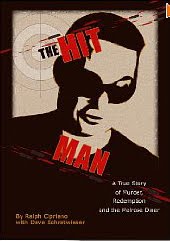
• Both have new books out. Schratwieser's is The Hitman; Anastasia's is The Ultimate Book of Gangster Movies.

They offered this advice for getting a job in journalism:

• Do an internship.
• Go into the field with reporters and photographers. "You're not going to learn remotely what you want to learn by sitting behind a desk at the station," Schratwieser said.
• Don't rely upon the Internet when reporting. Hit the streets.

What stood out for you?

Student Journalists Explain How To Get Your Groove On.

THE UNIVERSITY OF HAWAII student newspaper published a Valentine's Day edition, and offered sex tips. Unlike other newspapers (student or otherwise) that have regular sex columns, the Hawaii newspaper, Ka Leo, printed illustrations that visually portrayed the sex positions the writer describes.

Find the story online here. See it in print above on page 16.

Is this responsible journalism?

Paul Bomberger: "You Have The Ability To Be Whatever You Want To Be."

DAYS AFTER GRADUATING FROM Temple, Paul Bomberger took a job at his hometown newspaper, the Intelligencer Journal, filling in for a staffer on maternity leave. He was supposed to be at the job for about 9 months. He stayed 15 years.

"You can't beat the newspaper platform for the thrill of a big story," Bomberger said in class yesterday.

At the Intelligencer Journal, he developed a specialty covering business, which eventually landed him in the position of assistant business editor at the Palm Beach Post. He then went to the Sun-Sentinel in Ft. Lauderdale to become the deputy business editor. In 2010, he returned to Pennsylvania to be the editor of Risk & Insurance magazine, a trade publication serving a very engaged, niche audience. He left that position last month and now he's freelancing and consulting.

"I've truly enjoyed doing this," he said, speaking about his career in journalism. "You can make a good living doing this. You'll work hard but you'll be able to pay your bills. And you get a sense that you helped make a difference in your community. You're doing a public service."

His interest in journalism was born here in Philadelphia, where he spent time with his newspaper-loving grandfather. He wrote for his high school newspaper but he also participated in speech and debate groups, learning to write and speak clearly and effectively.

He went to Juniata College for two years but decided he needed to be in a more focused journalism program. So, he came to Temple. He did an internship while he was a student here, and he worked in the Daily News circulation department. He also freelanced for various publications and wrote a few stories for the Temple News.

"When I finished here, I felt like I could compete for a job," he said. "When an editor hands you a story and you can turn it in - and it needs only minimal editing before publishing, you're good to go."

He had a few suggestions for students entering journalism:

• Take advantage of your professors - beyond the classroom.
• Take a wide variety of courses and get involved in a wide variety of stuff while in college.
• Find whatever inspires you, and pursue that.
• "At the end of the day, figure out what you do best," he said. "Where do you shine?"
• The key skills you need to develop are interviewing, researching, writing, figuring out who you need to speak with to get the story, and developing a good bullsh*t detector.

Here are a few other things he said that I found interesting:

• You find stories by reading everything. Then you call people. And you visit them in person. "If you're doing a story, you want to be eyeball to eyeball with somebody," Bomberger said.
• The key to being a good interviewer is being prepared before speaking to people. Read everything. Know the terminology of the subject your covering. Know the players.
• Get anecdotes that you can use to build excitement in your stories.
• Being a good writer means having the ability to get the essential facts to people in a clear, coherent fashion that is easy and enjoyable to read.
• You need to have authority in the story. You understand everything. If you don't, you need to continue digging for information and interview more people.
• Magazines offer a lot of space to tell long, analytical stories.
• Recongnize who your audience is when you write. Trade magazines, for instance, speak to a very knowledgable readership.

"You have the ability to be whatever you want to be," Bomberger said. "Take risks. Go after it. Be accurate, balanced and maintain your integrity. Follow your principles and do not compromise."

What stood out for you?